Explore properties sold within the past 12 months in Visitation Park map search. Prices and statuses are reported by the listing source; review each property’s details.
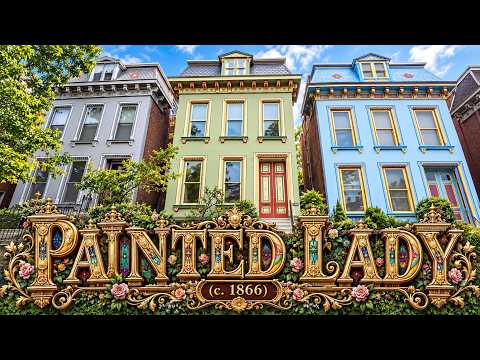
Listings show you photographs. Home tours can show you scale, layout, architectural details and how the spaces actually connect.
Choose a St Louis City tour from the playlist below. This gallery follows the City playlist as new videos are added.
Want to explore more of Greater St Louis? Our Community Home Tours collection brings together video walkthroughs from neighborhoods and communities throughout the region, making it easy to explore homes, architecture, layouts and local character.
Visitation Park extends from Maple Avenue south to Delmar Boulevard, between Union Boulevard on the east and Belt Avenue on the west. The City’s map places Ivory Perry Park within these boundaries and provides a block-by-block reference for exploring the neighborhood.[44]
Explore the people, buildings and community institutions behind Visitation Park’s history. Follow the guide through residential architecture, housing history, community institutions and recreation, then use the current resources to learn more about neighborhood life today.
Begin with homes for sale and recorded recent sales, then explore St Louis City home tours above. A dedicated playlist for Visitation Park is coming soon.
The area developed from large landholdings rather than an early downtown street grid. The City’s history identifies nineteenth-century holdings associated with Lucien Cabanne, James Clemens Jr. and Emanuel de Hodiamont, followed by estates along Union. Private residential places became part of the later pattern: Windermere Place in 1895, Beverly Place in 1905 and Savoy Court in 1909. Those separate developments help explain why the neighborhood’s history is best read street by street, alongside the institutions that occupied larger tracts.[1]
Local preservation
Protecting a varied historic ensemble
The Visitation Park Historic District was created in 1975 and expanded in 1987. The City’s account emphasizes its mixture of residential architecture and substantial institutional buildings along Union Boulevard, with the former academy grounds at its western edge. That history helps explain the district’s organizing idea: protection of a related collection of streets, buildings and landscape, rather than recognition of a single architectural style. The historic district has its own mapped boundary, which should be checked separately from the City neighborhood when researching a property.[5]
An institution’s community role
A congregation that kept adapting
Union Avenue Christian Church formed through the 1902 merger of Central Christian and Mount Cabanne Christian churches. Its own history records a 1928 welcome to a group of deaf worshippers and a 1940 congregational vote to remain at the urban location. Later chapters included a preschool operated with Joint Community Ministries, the beginnings of Northwest Meals on Wheels and space for the West End Players Guild. The Arts Group of Union Avenue formed in 1988. Together, these episodes show how an established building supported changing educational, cultural and service activities over successive generations.[8]
Literary history
Ntozake Shange’s St. Louis childhood
Nine PBS’s description of its interview with Ntozake Shange identifies Windermere Place as her childhood home in the 1950s. That connection places a major literary life within the neighborhood’s residential history.[10]
The biography issued by Shange’s Literary Trust describes the importance of her experience integrating St. Louis public schools. It identifies Betsey Brown as a novel centered on her childhood and the city’s civil rights movement. Shange became known for combining poetry, music and dance in her theatrical work. Her writing offers a way to explore the emotional and cultural dimensions of this period, while remembering that a novel transforms experience into fiction rather than serving as a literal record of every neighborhood event.[9]
The park’s namesake
Ivory Perry’s work for housing and health
Ivory Perry’s public work connected civil rights, tenants’ organizing and children’s health. Historian George Lipsitz’s biography traces his involvement with the Congress of Racial Equality and his 1965 appointment as a housing outreach worker with the Human Development Corporation. Perry helped organize tenants, pressed for housing-code enforcement and participated in the movement behind the public-housing rent strike. His campaign against lead poisoning brought residents, technicians and physicians together for screening and treatment, while pressing the City for restrictions on lead-based paint. Understanding that work gives the park’s name a civic meaning beyond the former academy site: it commemorates an organizer who treated the condition of housing as a matter of public responsibility.[11]
Neighborhood organizing
The work of maintaining an integrated community
The Missouri Historical Society’s Andy J. Brown Jr. Papers connect Windermere Place to the wider West End Community Conference. Brown helped establish the organization in 1955 and became its first president. The finding aid describes efforts to sustain an integrated neighborhood and challenge disruptive real-estate practices. In 1962, the organization proposed rehabilitation, repair assistance and financing support instead of wholesale clearance. Rehabilitation was central to its vision of neighborhood renewal.[12]
Educational history
Learning through tools and academic study
The Manual Training School brought a distinctive educational tradition to the area in 1905. Charles Penney Coates’s 1923 federal history describes a program combining mathematics, English and other academic subjects with drawing and work in wood and metal. Its new buildings were occupied in September 1905 after a winter groundbreaking. Washington University united the school with Smith Academy in 1915 and ended its preparatory instruction in 1917. The episode connects the neighborhood to a national debate about practical education: students were expected to develop intellectual skills and disciplined use of tools within the same course of study.[13]
Outdoor neighborhood life
Ivory Perry Park
Ivory Perry Park is the neighborhood’s public recreation space, with a playground, basketball court, softball field and pavilion listed by the City.[2]
The pavilion offers a setting for a picnic or an informal gathering. The City describes it as available to whoever arrives first, with no pavilion permit required and no advance reservations. That arrangement suits a flexible outing while keeping the space available for shared neighborhood use.[17]
The softball field has a different arrangement: Perry Field 01S can be reserved by permit, and the City lists it as shared when no reservation applies. Its field record supplies the Parks contact for organizing a game or asking about a permit.[18]
A vanished campus
The academy behind the park’s name
Visitation Academy occupied its Cabanne-and-Belt campus in 1892. Barnett, Haynes & Barnett designed the substantial French Renaissance building. The school moved to North Ballas Road in St. Louis County in 1962; the City acquired the former grounds, demolished the main building and created Visitation Park, now Ivory Perry Park.[2]
Private-place planning
Windermere’s planned residential landscape
Thomas Wright developed the land that became Windermere Place, recording conditions for its conveyance in June 1895. The City’s preservation account explains the private-place model through controls on lot size, land use and sometimes architecture, together with obligations for maintaining streets and shared open space. It also describes the houses as an assortment of revival styles associated with the Beaux-Arts era. This was a coordinated residential development, with the spaces between buildings and the upkeep of the street included in its original planning.[3]
Enright Avenue architecture
A Colonial Revival residence from 1896
The City identifies the house at 5433 Enright as the Edward N. and Anne G. von Harten residence. Built in 1896, it was the block’s first residence when the surrounding land was still rural. Robert H. McMath designed the three-story Colonial Revival house. Design details include a Palladian window and a classical porch with a semicircular plan.[4]
Reading the streetscape
Materials, setbacks and the spaces between
The City’s published district standards reveal what preservation seeks to maintain. They address the relationship between building height and neighboring structures, recurring setbacks, the spacing of buildings, roof forms, visible materials and architectural details. Their introduction allows contemporary design when its scale, materials, placement and landscaping fit the historic surroundings. For a visitor, these categories offer a useful way to read a block: look beyond an individual facade to the rhythm of porches, rooflines, yards and street edges. For a proposed alteration, the published standards are a starting point for property-specific review.[6]
Union Boulevard landmark
Stonework with a deliberate rhythm
Union Avenue Christian Church gives the neighborhood a distinct example of Italian Romanesque design. Architect Albert Groves designed it in 1907, and construction was completed in 1908. The City’s landmark record calls attention to alternating courses of smooth and rough-cut stone. That contrast makes the wall surface part of the composition, adding texture and horizontal rhythm to the building’s mass. The church became a City Landmark in 1976, a separate designation from the surrounding historic district.[7]
Union Avenue church facade, 2012Union Avenue Christian Church’s facade, photographed January 30, 2012. The image records the building used by Union Avenue Opera. Paul Sableman · 2012-01-30 · CC BY 2.0. Preview resized; complete source composition retained.Nearby education
Soldan’s programs and campus recovery
Soldan’s historic campus, published at 918 North Union Boulevard, stands across Union in the Academy neighborhood. It is a nearby institution rather than a campus inside the official Visitation Park boundary.[23][24]
Soldan International Studies’ 2026–27 school website describes language study in French, Chinese and Spanish, Advanced Placement courses, and extracurricular opportunities in athletics, music and the arts. Its international focus also includes the Show Me The World travel program. The school’s own description is useful for understanding its educational emphasis without assuming that a nearby home provides admission.[23]
Families planning a move should also follow SLPS’s current transition information. On November 11, 2026, the district reported that the Board had approved some Future Ready recommendations while declining, postponing or seeking more information on others. That update does not confirm a Soldan campus reopening. Obtain the school’s current teaching location and enrollment guidance directly from SLPS.[25]
Nearby public resource
Cabanne Library across Union
Cabanne Library’s public address is 1106 Union Boulevard. The City places its parcel in Academy, across Union from Visitation Park, making it a nearby resource shared across neighborhood lines.[26][27]
The branch lists computers and printing, Wi-Fi, meeting rooms, a book drop, bike racks and curbside pickup. Its accessibility notice is specific: the building has stairs and no elevator, and it is not wheelchair accessible. Those details help residents decide whether an indoor visit or a pickup arrangement best suits their needs.[26]
SLPL’s June 1, 2026 board minutes record that Cabanne welcomed patrons back on May 18 after tornado-related closure and repairs. The restoration also reopened the original clerestory, bringing an architectural feature back into use. This is a documented reopening, even though the minutes noted that some additional work remained.[28]
Planning for school
Assignments, choices and registration
School research can begin with the specific home under consideration. The City’s address-based school search returns the elementary, middle and high schools associated with an address or parcel. This is more precise than using a neighborhood name or choosing the closest visible school building.[29]
For citywide specialized programs, SLPS publishes a separate application process through the Focus Parent Portal. Its 2027–28 instructions distinguish general, gifted and specialized high school options, with eligibility and placement rules for the requested program. A family considering one of those options should work through the application and current program list rather than treating home proximity as a placement guarantee.[30]
For the 2026–27 school year, the district directs new and returning families to complete online registration and indicate whether transportation is needed. The registration resource and the school-choice resource answer different questions and are useful together when planning a move.[31]
Performing arts
Opera at Union and Enright
Union Avenue Opera makes its home in Union Avenue Christian Church at 733 North Union Boulevard, within Visitation Park. The sanctuary becomes a performance venue with an orchestra pit and projected English translations for works sung in their original language. It brings a distinct evening-out destination into the neighborhood’s residential setting, at Union and Enright just north of Delmar.[19][21]
The company’s October 28, 2026 announcement looks ahead to its 2027 festival season: evening performances are planned for 7:30 p.m., with 3 p.m. Sunday matinees for Le nozze di Figaro and Sweeney Todd. The announcement says tickets will go on sale in early 2027. Check the company’s current performance and ticket pages when planning a visit.[20]
Visual arts
Gretchen Brigham Gallery
The Gretchen Brigham Gallery adds another kind of cultural activity at 733 North Union Boulevard. Presented by the Arts Group of Union Avenue, it hosts exhibitions in the church setting and publishes weekday visiting hours. Its autumn 2026 exhibition by Adelia Parker-Castro brought together photography, fiber art, collage, pottery and papier-mâché figures. That show’s closing reception was listed for November 28, 2026; the gallery remains a resource to follow for subsequent exhibitions. The gallery page also gives parking and contact information for planning a visit.[22]
Neighborhood direction
An adopted plan with resident involvement
Visitation Park shares the weCollab resident-led reinvestment plan with the West End. The City’s Planning Commission adopted it on June 14, 2023 as a neighborhood plan and supplement to the Comprehensive Plan. Its larger planning area reaches from Union to Skinker and from Delmar to Page. This broader geography explains why planning discussions include projects beyond Visitation Park’s own smaller boundary.[32]
The West End and Visitation Park Development Review Committee gives residents a forum for responding to proposed residential, commercial and rehabilitation projects. Cornerstone CDC describes it as a volunteer body supported by residents and people with development expertise. Its role is to provide community feedback; formal development decisions remain with the City. For someone considering a renovation or following a nearby proposal, that distinction helps clarify the local conversation.[33]
Residents and housing
Following neighborhood housing work
Cornerstone CDC supports the resident-led implementation group that prioritizes the weCollab plan. Its participation page links to an implementation tracker and describes the Community Ambassador program, which it administers with weCollab. These are useful ways for a new resident to learn which projects neighbors are discussing and how ongoing work connects to the adopted plan. Residents can use those channels to contribute to project discussions and follow implementation.[34]
A separate 2026 housing study commissioned from PGAV Planners examines the West End and Visitation Park together. Cornerstone describes its purpose as identifying housing gaps, preserving affordability and exploring options such as infill houses and small multifamily development. The project page anticipated completion in fall 2026 while continuing to describe feedback collection. It supports the existence and aims of the study; it does not establish a completed report, new homes available for purchase or an individual financial benefit.[35]
Understanding a property
Home records, repairs and recovery
A home’s recorded history can help turn an appealing exterior into a more informed comparison. The City’s property search brings together ownership, land use, sales information, taxes, building permits and service requests. For a renovated house or a proposed rehabilitation, these records help organize questions about prior work and the parcel involved. The database is a starting point for those questions, with the home’s actual condition and completed work evaluated separately.[36]
The City’s Recovery Office coordinates response and rebuilding after the May 2025 tornado and links residents to its recovery website, outreach center and assistance information. Its November 2026 updates addressed home repairs and replacement of lost street and park trees. Those resources are relevant to affected properties and the surrounding public environment. A particular house’s damage, repair status and program eligibility still depend on its own circumstances, rather than the neighborhood name.[37]
Everyday connections
Union and Delmar bus routes
Metro’s 13 Union route connects the Union and Delmar area with the Central West End Transit Center, continuing north to Natural Bridge and West Florissant. It provides a north–south connection along the neighborhood’s eastern side and a useful starting point for trips toward the Central West End.[38]
The 97 Delmar route connects Civic Center, the Delmar Loop and Clayton transit centers, with stops along the Delmar corridor. Together, the Union and Delmar routes offer different directions of travel from the neighborhood’s edges. A home’s position relative to those corridors can matter as much as its distance from a destination.[39]
Metro’s planner builds a trip from an address, destination and chosen departure or arrival time, and includes an accessible-trip option. Its linked Transit app supplies real-time bus information. These tools help translate the route network into a journey at the time a resident actually needs to travel.[40]
A future connection
The Hodiamont corridor and Belt Avenue
The planned Hodiamont Greenway would connect Visitation Park with a wider series of neighborhoods along a former streetcar and bus corridor. Great Rivers Greenway describes a 3.5-mile route from near Vandeventer to Gwen Giles Park. Its appeal is the prospect of linking homes, parks, schools and other destinations along a continuous walking and bicycling route; the full corridor remains a future project.[41]
One segment being planned runs from Goodfellow to Belt Avenue in the neighboring West End and would meet the existing St. Vincent Greenway at Ruth Porter Mall Park. Great Rivers Greenway identifies a Belt Avenue crossing improvement and additional park amenities among the proposed features. Its project page reports analysis of feedback from a May 2026 survey, keeping this segment in the planning and design context.[42]
Construction reported at Gwen Giles Park is a different phase, also in the West End. That segment has an anticipated spring 2027 opening. Its construction progress should not be read as completion of the Goodfellow-to-Belt segment or the entire route through Visitation Park.[43]
A closer look · Historic places
Historic places & neighborhood landmarks
Open a profile to explore the records behind local landmarks and nearby places. Addresses and location notes connect each story to its place; historical descriptions retain their date context.
Former academy siteVisitation Academy groundsSoutheast corner of Cabanne and Belt avenues
The neighborhood’s namesake school moved here in 1892 from Cass Avenue. Its later relocation in 1962 led to the City’s acquisition of the property for a park. This is the former campus site, not the academy’s present County location.[1]
Historic residential placeWindermere PlaceWindermere Place, west of Union Boulevard
The private place’s development dates to 1895. City preservation records describe a collection of revival-style houses and an original plan that treated street maintenance and shared open space as part of the residential setting.[3]
City Landmark 116Von Harten residence5433 Enright Avenue
This 1896 Colonial Revival residence was designated a City Landmark in 1980. The official record identifies Edward N. and Anne G. von Harten and architect Robert H. McMath.[4]
City Landmark 71Union Avenue Christian Church733 Union Boulevard
Completed in 1908, Albert Groves’s Italian Romanesque church is distinguished in the City’s record by alternating smooth and rough-cut stone. Its architectural landmark designation dates to 1976.[7]
Historic educational complexSmith Academy and Manual Training School5351 Enright Avenue
The former school complex entered the National Register of Historic Places on April 28, 2003, under the joint name Smith Academy and Manual Training School. The State’s listing identifies this Enright Avenue address.[14]
Historical accounts and public records connect neighborhood places with the people who shaped them.
Community memory · Documented memory · interview catalog
Perry reflects on organizing
The Missouri Historical Society catalogs a 1988 interview with Ivory Perry conducted by Mary Seematter. Its summary records his discussion of CORE and ACTION, the influence of the Jefferson Bank protests on his later activism, and the role of community leadership. It also identifies his work against lead poisoning and with tenants organizing the 1969 rent strike. This cataloged recollection connects the park’s namesake to a continuing practice of organizing across different issues. The linked catalog identifies the interview and its subjects.[15]
Community memory · Documented memory · community archive
Everyday records of neighborhood work
Brown’s archive preserves Windemere Place Association minutes, bylaws and correspondence about street and utility work, together with West End Community Conference newsletters. These ordinary records make organizing visible through meetings, maintenance and shared events, alongside the larger public campaigns.[12]
Community memory · Documented memory · firsthand memoir
A student’s arrival on Enright
In a 2026 memoir published by the Landmarks Association, Julius K. Hunter recalled entering Harris Teachers College at 5351 Enright after graduating from Sumner. He remembered approaching the registrar’s office, gaining admission and working several jobs to cover tuition and books, including gardening, restaurant work and playing a church organ. His recollection also describes the uneasy social experience of an institution still adjusting to integration. The account adds a student’s perspective to the former school complex, showing how an imposing educational setting could hold ambition, financial effort and unresolved social barriers at the same time.[16]
Research sources & image credits
Numbered references connect the guide to official maps, institutional histories, archives, community organizations and service providers. Documentary images retain their source dates and historical context.
Continue exploring Greater St. Louis beyond Visitation Park. Search by community, browse the geographic hierarchy, or use the map to discover neighboring city neighborhoods and communities throughout the metropolitan region.
Greater St. Louis Community Atlas
Use Ctrl + scroll to zoom the mapUse two fingers to move the map
Map Preview Scroll normally here, or use the button below for the interactive map.
Loading Community Atlas Terrain map and metropolitan boundaries are loading.
Use two fingers to move the mapPinch with two fingers to zoom
Terrain/topographic basemap by MapTiler. Metropolitan and county-equivalent boundaries use U.S. Census Bureau TIGERweb geography.
Explore Greater St. Louis
Search a community directly or narrow the alphabetical directory by one of the metropolitan area's component jurisdictions. The map is a discovery tool, not a ranking.
Community Directory · A-Z
↓ More communities below
Atlas Scope Metropolitan AreaGreater St. Louis
Missouri + Illinois metropolitan region
Communities appear alphabetically. Geographic filters organize the directory by location; they are not recommendations or rankings.
Geographic Areas
Choose a state or county to highlight it and filter the community directory. The map position stays where you left it.
The Next Step · Your Property
How Much Is Your Home Worth?
Own a home in Visitation Park? Explore your property’s estimated value and consider how recent sales, location, architecture, condition and local market activity may influence its position. When you are ready for a closer look, Christopher can help evaluate comparable sales and your next steps.